


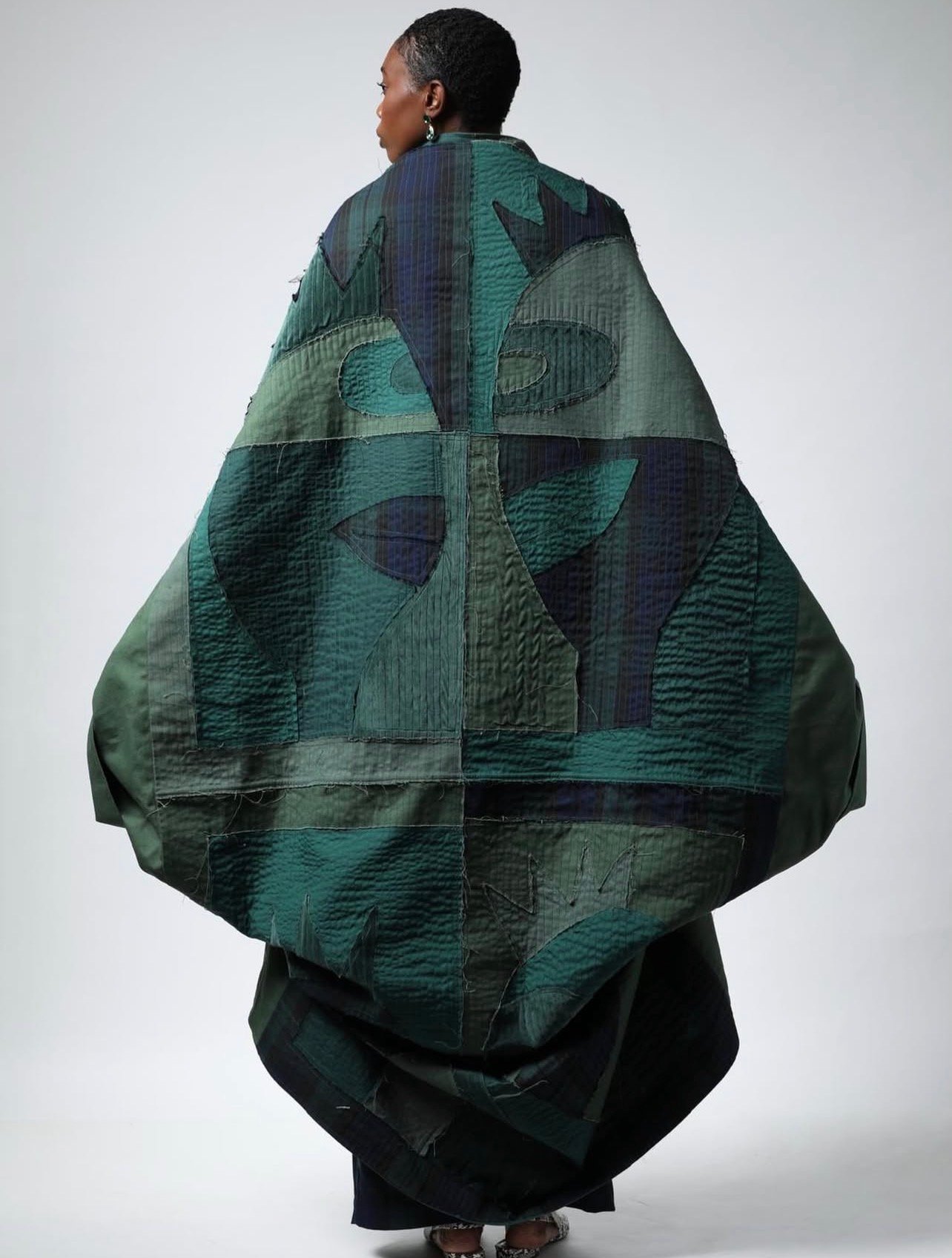

Afreximbank’s Creative Africa Nexus (CANEX) programme has spent years building infrastructure for the continent’s creative industries. Now, with a transatlantic vision and a strategic foothold at Paris’s most commercially powerful fashion trade event, it is opening a door that Caribbean designers have long been waiting for.
There is a version of the Caribbean fashion story that the world already knows. It is told in the hand-painted prints that drift down resort runways each February, in the silhouettes that arrive in European capitals through the work of diaspora designers who left for London or New York, in the endless editorial references to ‘island colour’ and ‘tropical ease.’ It is a story about influence — and it is, in many essential ways, true.
What that story has historically left out is the business. Who owns the supply chains? Who controls the manufacturing? Who sits in the buying rooms? The creative output of the Caribbean has traveled widely; the economic value it generates has tended to stay elsewhere. For the designers actually based in the region — those building labels in Port of Spain, Kingston, or Georgetown — international market access has remained one of the industry’s persistent structural gaps.
That context is essential for understanding why the Creative Africa Nexus (CANEX) programme, administered by the African Export-Import Bank (Afreximbank), carries real significance for Caribbean fashion. Because what CANEX is attempting — and, by a growing body of evidence, beginning to achieve — is not simply cultural celebration. It is trade infrastructure.
What CANEX Actually Is
Launched by Afreximbank, the continent’s leading pan-African multilateral trade finance institution, CANEX was designed from the outset as an economic intervention rather than a cultural one. Its premise is that the creative industries — fashion, film, music, visual art — represent among the most undervalued export sectors in African and diaspora economies, and that the gap between creative output and commercial return is not inevitable but structural.
The programme operates across multiple vectors: direct investment in creative businesses, trade facilitation, intellectual property education, capacity building, and, critically, market access programming. Afreximbank has committed substantial capital to the initiative, and its ambitions are explicitly commercial. CANEX does not want to fund creative projects; it wants to build industries.
Central to that model is a concept the bank calls Global Africa — an acknowledgment that African cultural identity does not terminate at the continent’s borders but extends across the diaspora, most pointedly into the Caribbean. The region’s shared history with the African continent, expressed through textiles, craft traditions, oral culture, and aesthetic philosophy, is treated not merely as heritage but as a live commercial network with unrealised potential.
CANEX does not want to fund creative projects. It wants to build industries.
— Programme analysis, 2025
This framing has concrete implications for Caribbean designers. Rather than being positioned as peripheral beneficiaries of an African development programme, they are constituted as core participants in a transatlantic creative economy. The distinction matters: it determines what kind of support is offered, and on what terms.
The TRANOÏ Partnership and What It Means in Practice
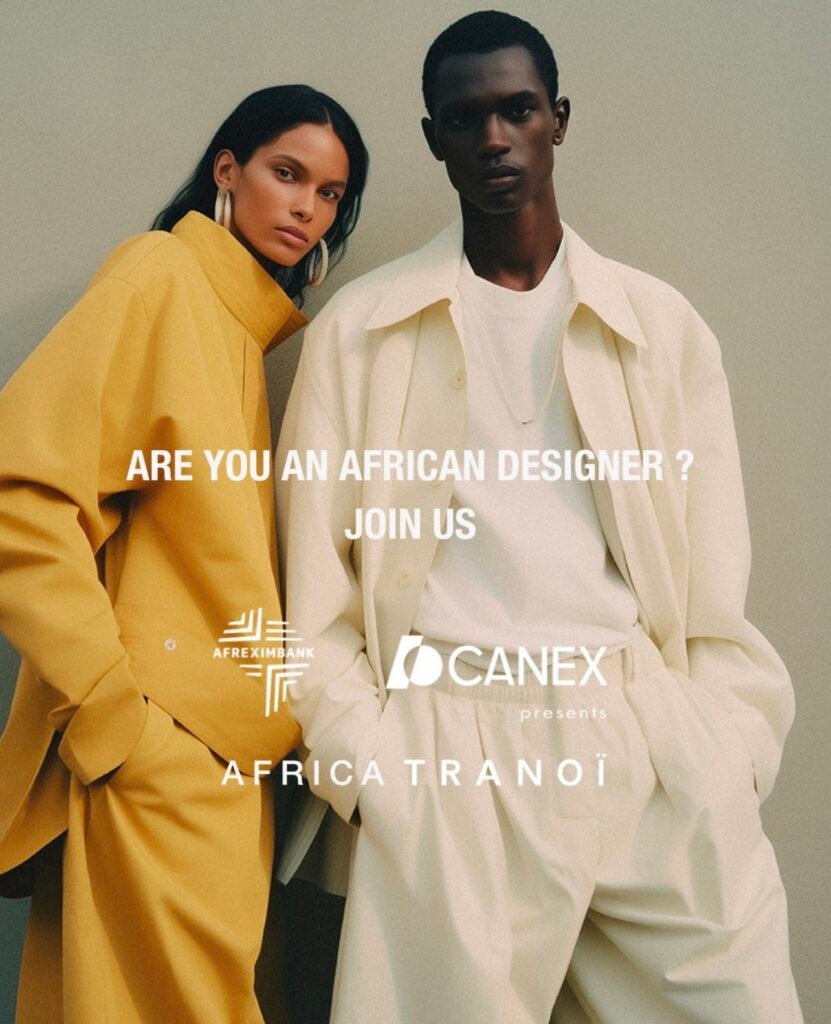
The most operationally significant element of CANEX’s fashion work is its partnership with TRANOÏ. For those outside the trade ecosystem, the name may not be immediately familiar; for anyone in the buying rooms of international retail, it signals one of the most commercially dense fashion environments in the calendar.
TRANOÏ is a trade event, not a runway showcase. It runs alongside Paris Fashion Week and, increasingly, Tokyo Fashion Week, and its function is explicitly transactional: designers present collections directly to the international buyers, wholesale accounts, and retail partners who attend with specific sourcing mandates. Editorial coverage and cultural visibility are secondary. Orders are primary.
Through the CANEX Presents Africa programme, Afreximbank sponsors emerging designers from Africa and the diaspora to participate in TRANOÏ as exhibitors. This is not a ceremonial presence. Sponsored designers occupy stand space in a marketplace attended by the same buyers who stock independent boutiques and department store floors in Paris, London, Tokyo, and beyond. They make appointments, show samples, and negotiate terms.
For a designer based in Trinidad or Jamaica, the value proposition is significant and difficult to replicate through other means. Participation in TRANOÏ provides access to a global retail buyer network, exposure to international trade media, introductions to manufacturers and logistics partners, and the direct opportunity to secure wholesale orders that can materially scale a brand’s production capacity and revenue base.
A single successful showcase at TRANOÏ can generate retail relationships that no amount of digital marketing can replicate. The room matters because the people in it have purchasing authority.
— Industry observer, Paris Fashion Week
The transactional logic of trade events is well understood within established fashion markets. For designers from smaller economies where domestic retail infrastructure is thin and wholesale culture underdeveloped, access to these environments can be genuinely transformative in ways that are harder to achieve through digital channels alone.
Caribbean Designers in the Programme
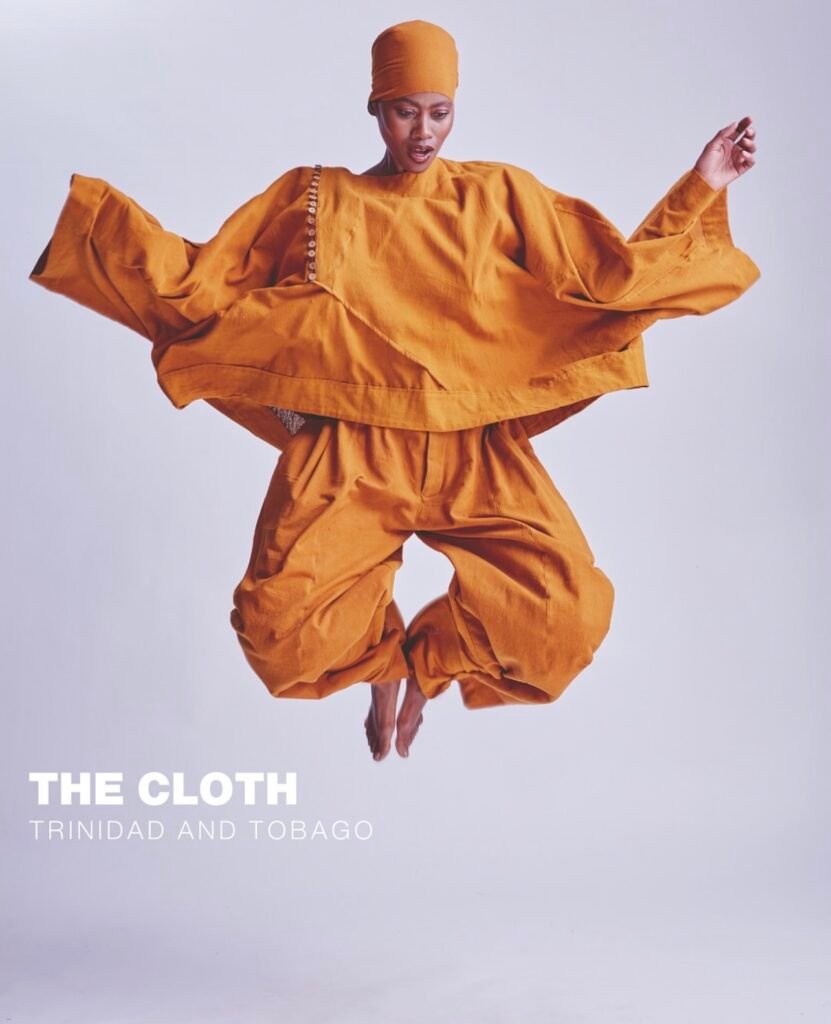
Caribbean participation in CANEX-supported events has grown steadily, with designers from Trinidad and Tobago, Guyana, Jamaica, and other territories representing the region within Global Africa programming.
Among the most visible beneficiaries in recent cycles is The Cloth, the Trinidadian fashion label whose work sits at the intersection of structural design and cultural vocabulary. The label has been featured within TRANOÏ exhibitions through CANEX programming — an opportunity that situates it not as an exotic regional entry but as a competitive participant in the same commercial context as labels from Paris, Copenhagen, and Seoul.
That positioning carries weight beyond any individual showcase. Consistent presence in trade environments of this calibre builds the kind of institutional credibility that supports longer-term buyer relationships, press relationships, and investment conversations. For Caribbean designers, participation through CANEX creates a track record in international markets — something that is otherwise difficult to establish without the capital or connections that facilitate independent access to these environments.
The broader Caribbean contingent within CANEX programming reflects the range of the region’s design culture: from garments that draw directly on African textile traditions and diaspora craft practice to contemporary international collections that happen to originate in the Caribbean. The programme does not require a single aesthetic or cultural register. What it requires is commercial readiness — the ability to present coherently to international buyers and to follow through on wholesale commitments.
The Infrastructure Argument
It is worth dwelling on the word infrastructure, because it is doing serious analytical work in any account of what CANEX is trying to accomplish.
Now the Caribbean fashion industry has no shortage of talent. It has, in various territories, growing networks of designers, a set of fashion weeks with regional and sometimes international reach, editorial platforms, and a diaspora network that spans the world’s major style capitals. What it has historically lacked is the connective tissue between creative production and commercial scale — the buyers, the trade platforms, the manufacturing networks, the investor relationships, and the distribution infrastructure that allow a well-designed collection to become a viable export business.
CANEX, through its partnership with TRANOÏ and its broader ecosystem of creative economy investment, is attempting to provide that connective tissue. Its model is less about direct subsidy than about leveraging Afreximbank’s institutional capital and relationships to create access points that individual designers could not create for themselves.
The question was never whether Caribbean designers could produce work for international markets. The question was always whether international markets had the infrastructure to receive them on equitable terms.
The implications for individual designers are real and measurable: access to buyers who can generate sustained wholesale revenue; relationships with manufacturers who can support production at scale; introductions to investors who understand the creative economy as a commercial sector. Each of these constitutes a form of market access that is extremely difficult to self-generate from within a small island economy.


Broader still are the implications for regional creative economies. When Caribbean designers build export-oriented businesses, they create employment in design, production, logistics, and retail. They build institutional knowledge within regional industries. They establish the precedents and infrastructure that make the next generation of creative businesses easier to launch and scale. The argument for fashion as an economic development vector is not merely theoretical; it is well-supported by the experience of creative industries in markets from South Korea to Denmark.
The Structural Question This Raises
Any honest analysis of CANEX’s potential for Caribbean fashion has to reckon with the structural conditions in which it operates. The programme is genuinely novel and its commercial logic is sound. But it is operating within a global fashion system that has historically not been organised around equitable access for designers from the Global South.
The international fashion trade ecosystem — the buyers, the platforms, the press, the investment community — remains substantially concentrated in a small number of cities and cultural frameworks. TRANOÏ is an improvement on the runway system for commercial access, but it is still a Paris-based event attended primarily by European buyers working within European retail frameworks. The standards, aesthetics, and commercial expectations that define success within that environment are not neutral.
CANEX’s response to this is partly philosophical and partly practical. The Global Africa framing is, among other things, an argument that the cultural frameworks operating within these commercial environments should be broader — that buyers and retailers who are not currently sourcing from Africa and the Caribbean are leaving commercially significant opportunities on the table. This is a reframing of the access question as a market efficiency question, which is a strategically sophisticated move.
Practically, the programme’s consistent investment in designer participation over multiple seasons reflects an understanding that single-event exposure is insufficient. Building genuine buyer relationships in international trade environments requires sustained presence, and sustained presence requires the kind of institutional backing that CANEX provides.
What Comes Next
The trajectory of CANEX’s engagement with Caribbean fashion suggests several developments worth watching.
First, the depth of participation matters as much as the breadth. A wider roster of Caribbean designers in CANEX programming is valuable; what would be more valuable still is building the follow-through infrastructure — the production capacity, the logistics support, the post-trade event relationship management — that allows initial buyer interest to convert into sustained commercial relationships.
Second, the programme’s ability to influence the conditions of access, not just facilitate participation within existing conditions, will determine its long-term impact. If CANEX succeeds not only in getting Caribbean designers into TRANOÏ but in shaping what international buyers and retailers expect to find there — in normalising Caribbean design within international buying conversations — it will have achieved something more durable than any individual showcase.
Third, the ecosystem effects of consistent CANEX participation are worth monitoring. Every Caribbean designer who builds an international wholesale business creates knowledge, contacts, and institutional capacity within the regional industry that subsequent designers can access. The programme’s value compounds over time, if the participation is sustained.
For Caribbean fashion, the opportunity that CANEX represents is substantial — and, relative to where the region’s design industry stood a decade ago in terms of structured international market access, genuinely new. The question is not whether Caribbean designers can compete internationally. The work consistently answers that. The question is whether the commercial infrastructure now developing around that work is robust enough to convert creative parity into economic equity.
On the current evidence, the answer is carefully, provisionally, yes — and getting more confident with each season.


