


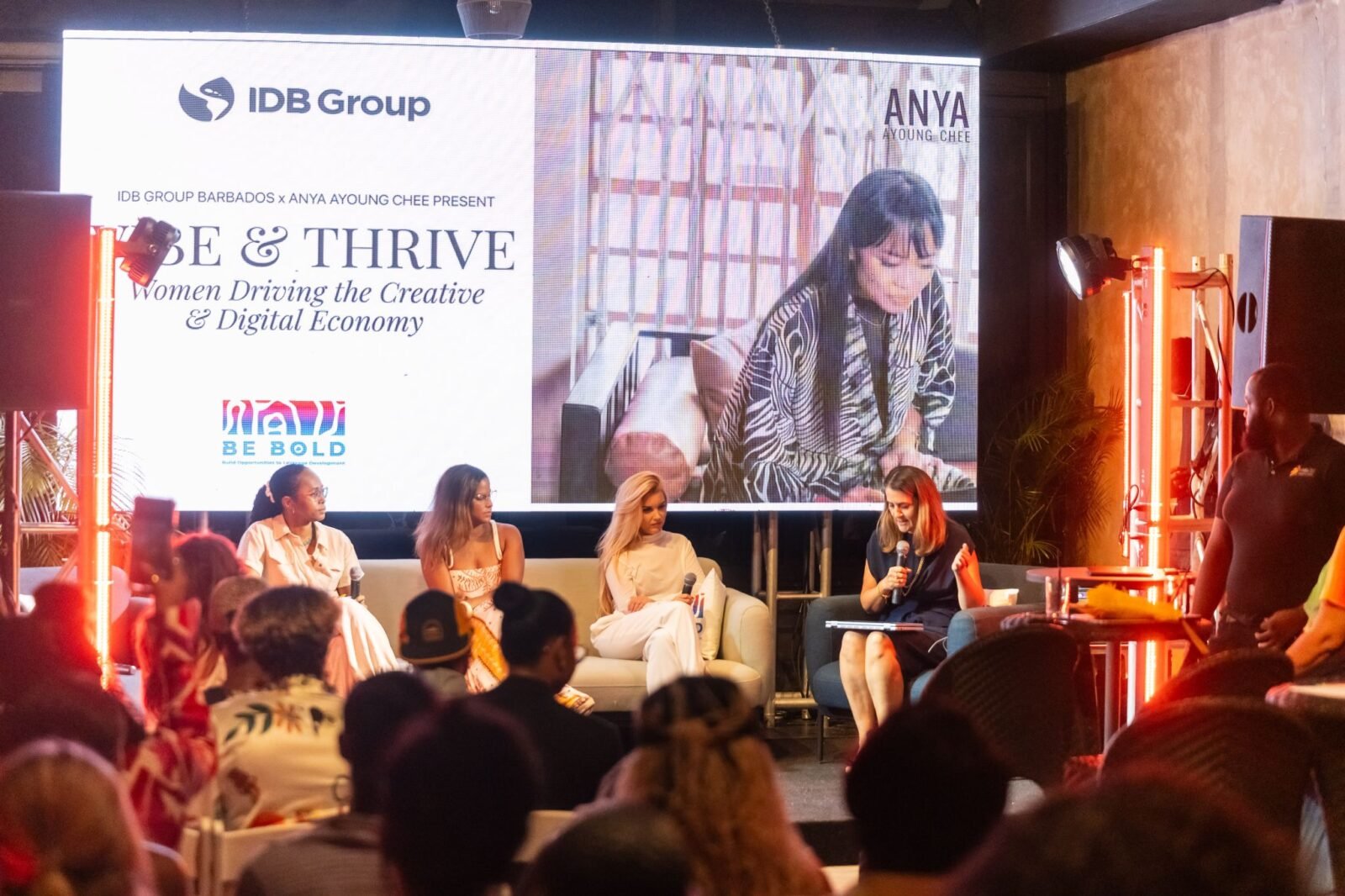

The Inter-American Development Bank’s (IDB) concept of the ‘orange economy’ — the creative industries as engines of GDP, employment and export diversification — has reshaped how the region’s development community talks about fashion. Whether that reframing has changed how it finances it is a more complicated question.
The IDB did not invent the idea that fashion could be an economic development sector. But it did, more than any other multilateral institution operating in the Latin American and Caribbean region, construct the analytical architecture that made that idea legible to governments, finance ministries, and development planners. That work — begun seriously in the early 2010s and sustained across more than a decade of research, publications, and programmatic investment — has had real consequences for the Caribbean, and understanding those consequences requires understanding the institution.
The IDB Group operates across three complementary arms. The IDB itself finances public sector lending to member governments. IDB Invest provides direct private sector financing to companies and projects. IDB Lab — formerly the Multilateral Investment Fund — functions as the Group’s innovation and early-stage venture arm, mobilising financing, knowledge, and connections for entrepreneurial solutions with high social and economic impact. Each arm approaches the creative industries through a different lens, and for Caribbean fashion, each matters differently.
The Orange Economy Framework
The IDB’s most durable contribution to Caribbean creative economies has been conceptual. The bank popularised the term ‘orange economy’ — its designation for the cultural and creative industries — through a body of research and publications that positioned the sector as a strategically undervalued component of regional GDP. The numbers the IDB assembled were striking: the creative industries generated over $124 billion in revenues across Latin America and the Caribbean and employed nearly 1.9 million people. The sector’s growth rate exceeded the regional GDP average. Fashion was identified within this framework as one of the most significant creative export categories.
For governments that had previously treated fashion as a cultural activity rather than a commercial one, this analytical framing carried policy weight. The IDB gave finance ministers and trade planners a vocabulary for understanding creative sectors as economic assets — and, crucially, a set of arguments for why public investment in those sectors could be justified on development grounds rather than purely cultural ones.
The bank has followed this intellectual work with practical investment: over 120 projects supporting cultural and creative industries across the region, spanning fintech mechanisms for creative financing, digital infrastructure for cultural institutions, public policy design for the sector, and entrepreneurship support programmes. IDB has convened the first multilateral development bank working group on cultural and creative industries, bringing together the African Development Bank, the Asian Development Bank, the Caribbean Development Bank, and the World Bank — an institutional coalition building that signals how seriously the sector is now taken at the MDB level.
For governments to generate public policies for these industries, they have to understand the economic value they bring. Showcase that value and you make an irrefutable argument.
— Trinidad Zaldivar, former Chief of the Creativity and Culture Unit, IDB
IDB Lab and the Caribbean
IDB Lab’s relationship with the Caribbean creative economy is particularly instructive. The Lab’s mandate — to drive innovation for inclusion by mobilising financing, knowledge, and connections for early-stage solutions — maps reasonably well onto the needs of creative entrepreneurs in the region. Since its founding in 1993, it has approved over $2 billion in projects across 26 countries in Latin America and the Caribbean.
The Caribbean has been a consistent IDB Lab priority, with the institution committing that at least 20 percent of approved IDB Lab projects would be in small and island states. The ONE Caribbean framework, launched in 2024, provides a structured regional approach to the Group’s Caribbean programming — integrating IDB, IDB Invest, and IDB Lab in a coordinated strategy that prioritises high-impact projects across the region.
For the fashion sector specifically, IDB Lab has deployed its Orange Innovation challenge — offering grants of up to $500,000 for entities with innovative business models using cutting-edge technologies in the creative economy, including fashion. These mechanisms represent genuine early-stage capital for Caribbean creative entrepreneurs who, as the IDB’s own research documents, face significant barriers to conventional financing.
The data the IDB has generated about those barriers is important context. Its study of creative enterprises in the region found that sixty percent of entrepreneurs surveyed had experienced at least one business failure, with the most common causes being insufficient financing and weak strategic planning. Up to twenty percent of failures were attributed to inadequate conviction from the entrepreneur or business partners. These are not merely interesting statistics; they are an indictment of the ecosystem conditions that Caribbean creative businesses are navigating, and they make the case for precisely the kind of blended support — capital, knowledge, networks — that IDB Lab is designed to provide.
Fashion as a Specifically Caribbean Story
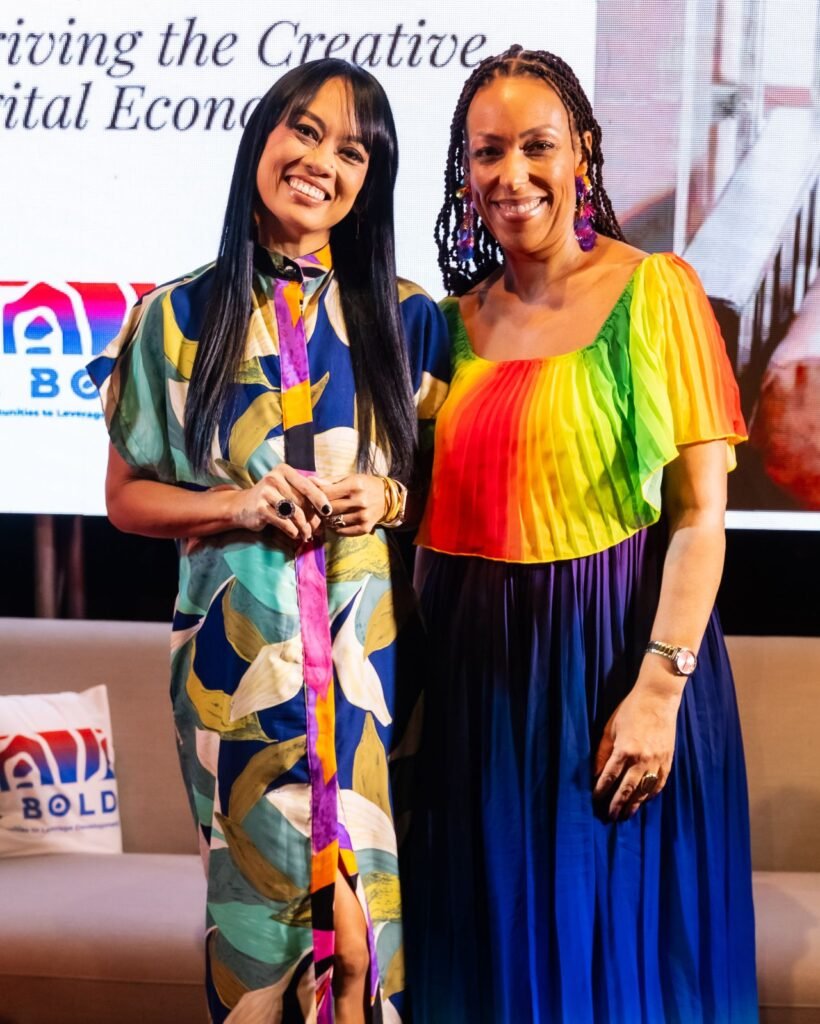
The IDB has been unusually direct in using Caribbean examples to illustrate the potential of the creative economy — and unusually specific about the challenges designers face. The bank’s public-facing work has featured Anya Ayoung Chee, the Trinidadian designer who won Project Runway Season 9, as a reference point for both the talent available in the region and the structural conditions that talent must navigate without adequate support.
I’m still part of a generation that’s bridging the gap. We’re overflowing with talent in this region. The lack of investment in entrepreneurs and the creative industries makes it very hard.
— Anya Ayoung Chee, designer, IDB NextGen Board member
What is striking about Ayoung Chee’s account — and about the IDB’s framing of it — is how precisely it identifies the problem the institution has been trying to address. The cultural expectation that Caribbean designers must ‘make it outside of the region in order to be validated’ is a market failure that has structural causes: the absence of investment, the lack of production infrastructure, the missing business support ecosystem. These are not personal failures; they are system failures. And system failures are, in principle, what development institutions are designed to fix.

The IDB has acknowledged that the diversity of the creative sector creates its own policy challenge. Fashion requires fundamentally different interventions from the film industry or the music sector: different supply chains, different financing instruments, different market access mechanisms, different intellectual property frameworks. Treating the creative industries as a monolithic sector generates programmes that are often too generic to address the specific needs of fashion entrepreneurs.
The Gap Between Analysis and Capital
The most significant analytical tension in the IDB Group’s work on Caribbean creative economies is the distance between the institution’s intellectual sophistication and the scale of capital actually deployed to the sector. The orange economy framework is genuinely excellent development economics. The publications are widely cited. The convening power is real. But for a Caribbean fashion designer seeking working capital to fulfil a wholesale order, the IDB’s most valuable contribution remains, in most cases, a set of arguments they can use to make the case for their own industry — rather than a direct financing relationship.
IDB Invest, the Group’s private sector arm, has committed $1.2 billion to small and island states between 2016 and 2024 and continues to commit at least ten percent of total financing to these markets. But IDB Invest’s business model — direct financing to private companies and projects — requires a scale of operation and a level of commercial formalisation that most Caribbean fashion SMEs do not yet meet. The gap between ‘eligible in principle’ and ‘accessible in practice’ is one the institution has acknowledged.
The most honest assessment of the IDB Group’s contribution to Caribbean fashion is this: it has built the intellectual foundation and the policy vocabulary for taking the sector seriously as an economic priority. It has deployed meaningful innovation capital through IDB Lab to early-stage creative entrepreneurs. And it has, through the ONE Caribbean framework, signalled a more coordinated institutional commitment to the region. What remains to be seen is whether those foundations translate into the scale of commercial financing that the sector actually needs — and whether the orange economy’s most promising designers can access that capital before they, too, become a statistic in the next failure survey.


