


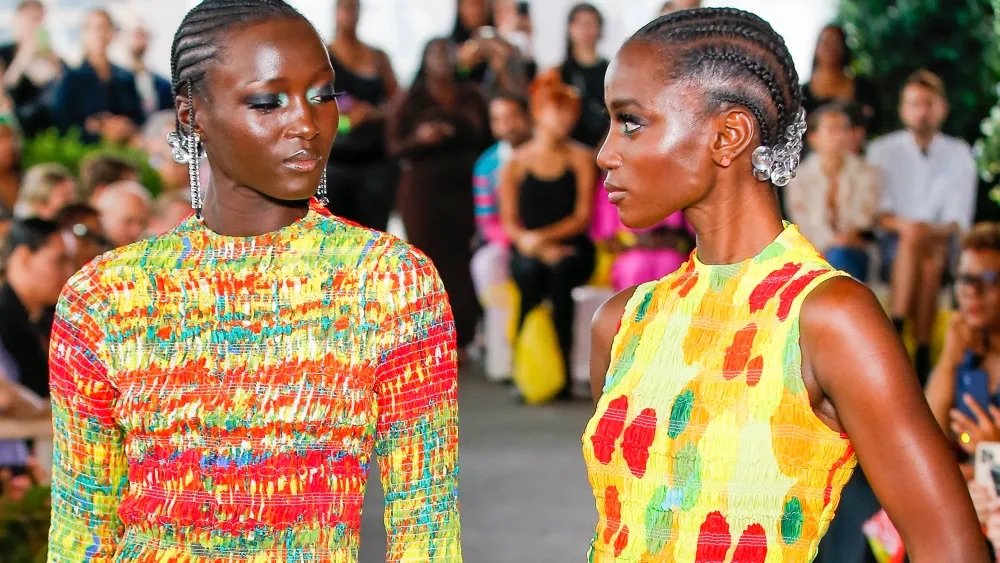

From Trinidad and Tobago’s decade-long experiment with a dedicated fashion state agency to Jamaica’s 2025 green paper, Barbados’s legislative framework, and Guyana’s newly formed Fashion Council, Caribbean governments are increasingly engaged with fashion as an economic sector. What separates genuine commitment from ceremonial interest is, as always, structural — and the evidence is mixed.
Caribbean trade ministers have delivered a familiar speech for two decades: fashion has tremendous potential; government is committed to supporting local designers; an ecosystem for global competition is coming. The commitment is often genuine. What it has not always been is structural. Building a competitive fashion sector requires policy, legislation, funding, trade infrastructure, manufacturing support, intellectual property frameworks, and — critically — institutional memory that survives changes of government. Four territories illustrate where the region stands: Trinidad and Tobago, Jamaica, Barbados, and Guyana.
Trinidad & Tobago: The Most Advanced — and Most Instructive — Experiment
No Caribbean government has invested more institutional capital in fashion than Trinidad and Tobago. FashionTT, established in 2013 as a CreativeTT subsidiary, built the most comprehensive government-backed fashion infrastructure in the Anglophone Caribbean: a Fashion Industry Strategic Plan, a Fashion Value Chain Investment Programme delivered with the Fashion Institute of Technology, inward buyers’ missions, a Savile Row Academy partnership, national fabric standards (TTS 578:2019), and grant funding up to $1 million per beneficiary. The Secured Transactions and Collateral Registry allowed designers to use intellectual property as loan collateral — exactly the structural intervention mature industrial policy requires.
In August 2024, InvesTT, exporTT, and CreativeTT were merged into a single Trade and Investment Promotion Agency. The official rationale was efficiency; the sector’s concern is more fundamental. A specialist institution with decade-deep fashion expertise, international relationships, and a dedicated strategic plan has been subsumed into a general trade body. Whether the institutional knowledge FashionTT spent ten years accumulating survives that merger is the central question T&T’s fashion sector faces.

Jamaica: The Creative Economy’s Largest Unrealised Asset
Jamaica’s creative industries contribute an estimated 5.1–7.6% of GDP — well above the global average — yet the sector operated for years without coherent policy architecture. Responsibility was fragmented across eight government departments with limited coordination. JAMPRO, the primary trade and investment promotion vehicle, has offered fashion access to structured buyer networks, most visibly through Expo Jamaica 2025, which attracted 884 buyers from 25 countries.
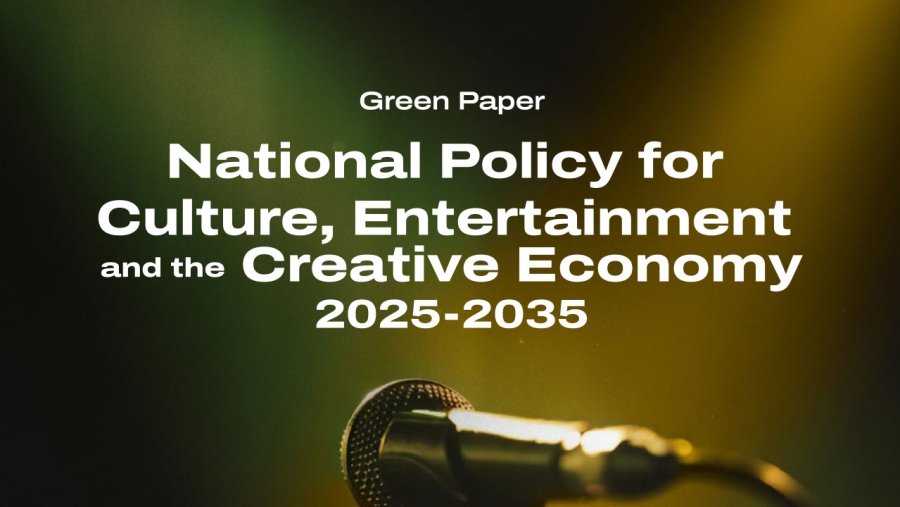
The landmark development is Jamaica’s National Policy for Culture, Entertainment and the Creative Economy 2025–2035, tabled as a Green Paper in October 2025. It proposes an Institute for Cultural Practitioners at the Caribbean Maritime University, a Jamaica Entertainment and Cultural Development Foundation to mobilise funding, and a Creative Economy Act to provide legal coherence across the sector. Caribbean Fashion Week — produced by Pulse since 2001 — has done more than any government body to establish Jamaica’s international fashion credentials. The bridge between the Green Paper’s ambitions and the funded fashion-specific infrastructure the sector still lacks remains under construction.
Barbados: The Legislative Leader — and the Implementation Challenge
Barbados has the most developed legislative framework for the creative industries in the Anglophone Caribbean. The Cultural Industries Development Act (2013, proclaimed 2015) gives registered fashion designers duty-free concessions and VAT exemptions on tools of trade, income tax concessions, and access to the National Cultural Foundation’s Cultural Industries Development Fund — grants of up to $30,000 BDS for project execution, with additional streams for technical assistance and capacity development.
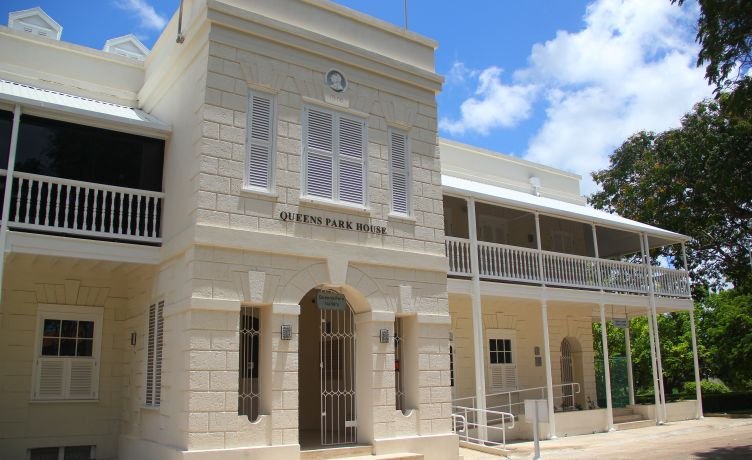
The 2023 Budget committed $2 million to fashion industry development through the Barbados Investment Development Corporation, targeting shared factory space, equipment, and micro-leasing for small operators. The announced redevelopment of Queen’s Park as a creative production hub, and incoming revisions to the CID Act, represent the most coherent government vision for fashion as part of a creative economy in the region. The challenge: closing the gap between legislative sophistication and the practical, commercial support actually reaching designers.
Guyana: Oil Wealth Meets Creative Ambition
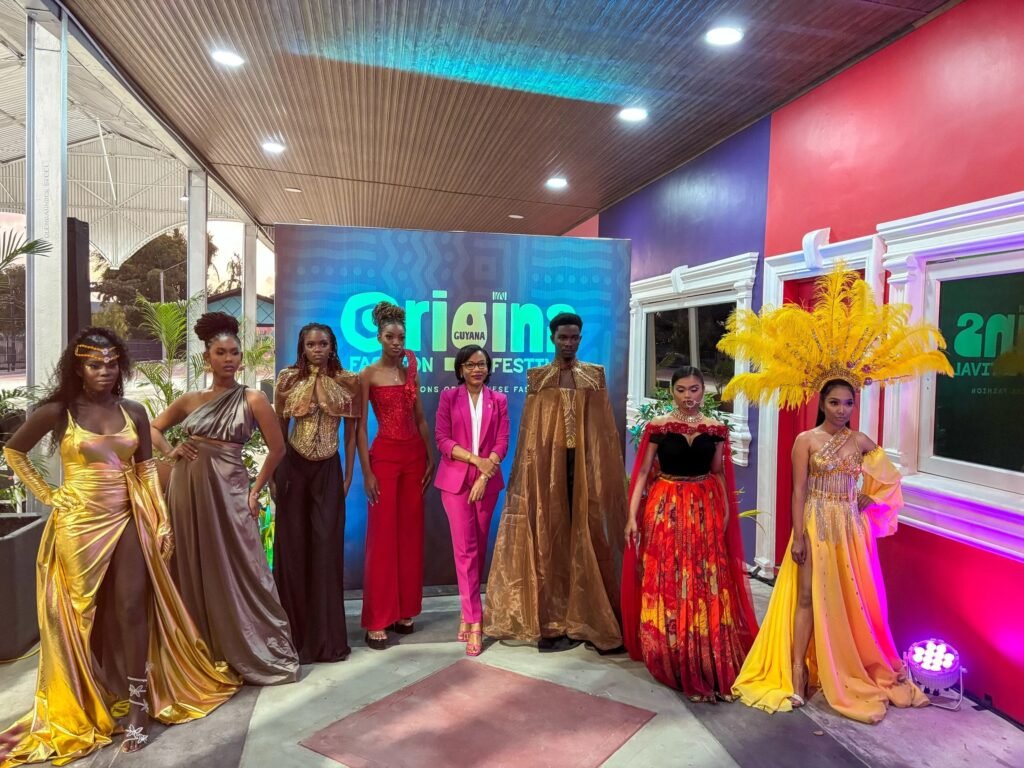
Guyana’s government engagement with fashion is the most recent and most directly tied to oil-driven diversification. In May 2025, President Ali announced a national Fashion Council during the Origins: Guyana Fashion Festival. The model echoes FashionTT’s architecture, with the advantage of a decade of regional experience and the fiscal resources of an oil economy. The Ministry of Culture operates a Creative Industries Grant of up to $1 million GYD for individual practitioners and has established a national Cultural and Creative Industries Registry. Guyana Fashion Week’s revival in 2024, and Marrisa Wilson’s New York Fashion Week success, demonstrate the talent base is real. What remains is the institutional connective tissue to convert political endorsement into a functioning export industry.
What Genuine Support Actually Requires
The comparison across these four territories clarifies what government support for fashion requires — as distinct from what it is often mistaken for. It requires sector-specific institutions, not general trade agencies with a fashion desk. It requires sustained funding through political cycles: fashion industry development is a ten-to-fifteen-year project, and governments that treat it as a four-year initiative produce four-year results. It requires legislative foundations that outlast ministerial enthusiasm. And it requires honest data — the basis on which a sector can advocate for itself with budget planners and development finance institutions.
The region’s governments are better engaged with fashion as an economic sector in 2025 than at any previous point in its history. The policy vocabulary has matured; the institutional models have been tested. What the region’s designers now need is institutional continuity, legislative protection, manufacturing infrastructure, and sustained funding — not more speeches. The countries that deliver will build not just a fashion industry, but the infrastructure of a regional creative export economy that generates employment, foreign exchange, and durable global cultural presence.

