


Funded by the European Union to the tune of €15 million and implemented by UNESCO across 17 Caribbean nations, Transcultura was the most ambitious multilateral cultural investment the region had ever seen. For Caribbean fashion, it built training infrastructure, staged the first pan-Caribbean fashion show in Havana’s history, and sent its winning designers to Ljubljana, Slovenia. Then, in June 2025, it quietly concluded. This is an account of what it built, what it meant, and what the region must now build next.
There is a particular kind of institutional ambition that describes itself in language so broad it risks meaning nothing: cultural integration, people-to-people cooperation, strengthening the creative economy, fostering entrepreneurship. These are the phrases of development programmes everywhere. What made Transcultura different — and what makes it worth serious analytical attention for anyone working in Caribbean fashion — was not its language but its architecture. In five years of operation, it built things that had not existed before.
Transcultura: Integrating Cuba, the Caribbean and the European Union through Culture and Creativity launched in Havana in December 2019. Funded by the European Union at €15 million — UNESCO’s most ambitious cooperation initiative across the Latin America and Caribbean region — it ran for five years across 17 small island developing states, targeting young creative professionals between 18 and 35 across the full linguistic sweep of the Caribbean: Anglophone, Hispanophone, and Francophone. Over that period, it trained more than 750 young people, delivered 45 or more specialised workshops, developed a 60-plus course catalogue through the Caribbean Cultural Training Hub, engaged more than 200 organisations from the Caribbean and the European Union, and directed 55 percent of its benefits to women. These are not negligible numbers for a region where creative industries training has historically been fragmented, nationally siloed, and chronically underfunded.
Fashion in da House: The Show That Changed the Conversation
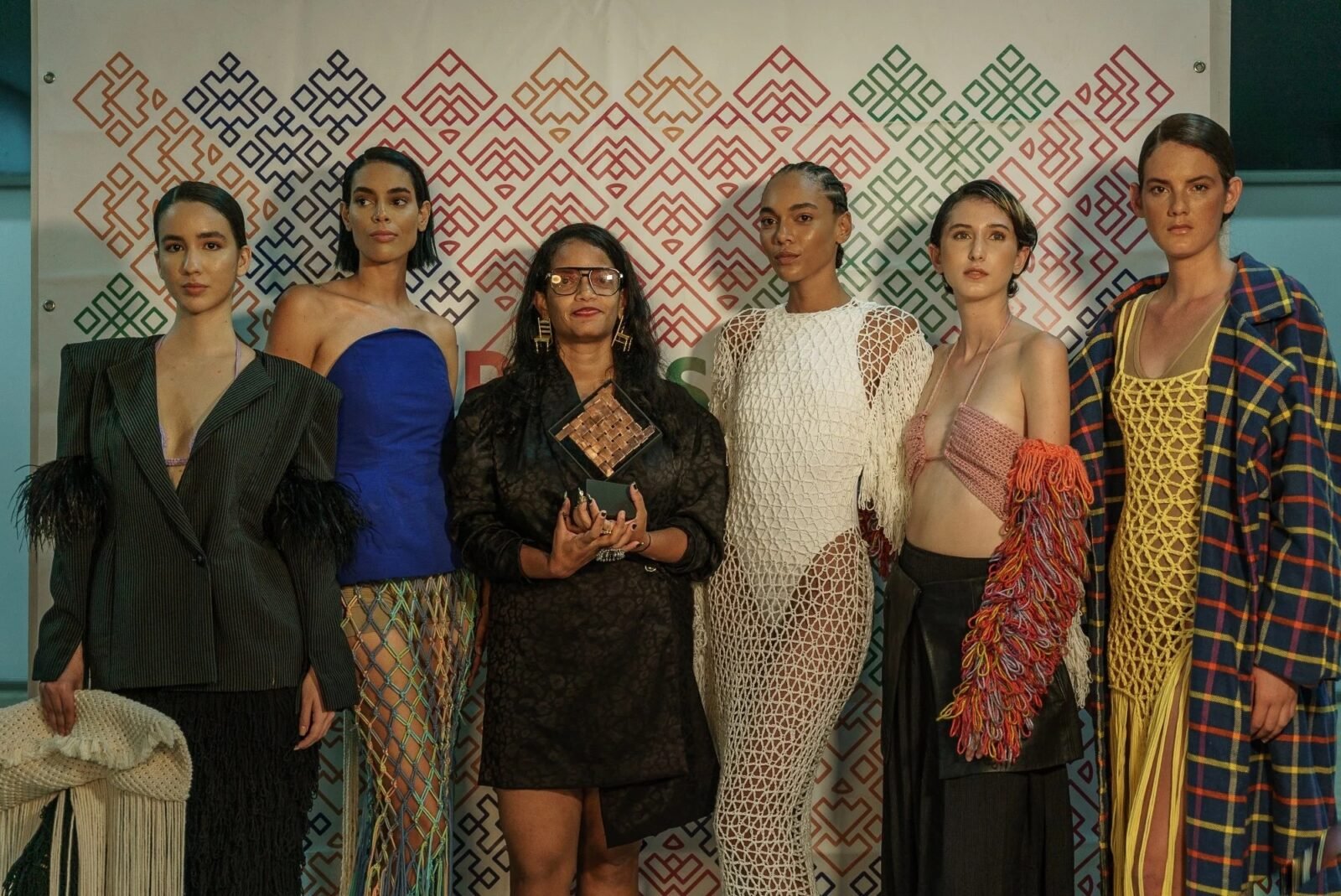
The most significant fashion-specific intervention of the entire Transcultura programme was concentrated into a single extraordinary week in May 2024. The Made in the Caribbean Fashion Design Competition opened in February of that year with a call for young Caribbean designers between 18 and 35, across fashion design, accessories, and jewellery. Designers were asked to present a contemporary, fashion-forward mini-collection representing Caribbean identity, cultural diversity, and the mutual influences that define the region’s creative heritage — not simply a call for beautiful garments, but for garments that could carry the weight of a region’s identity.
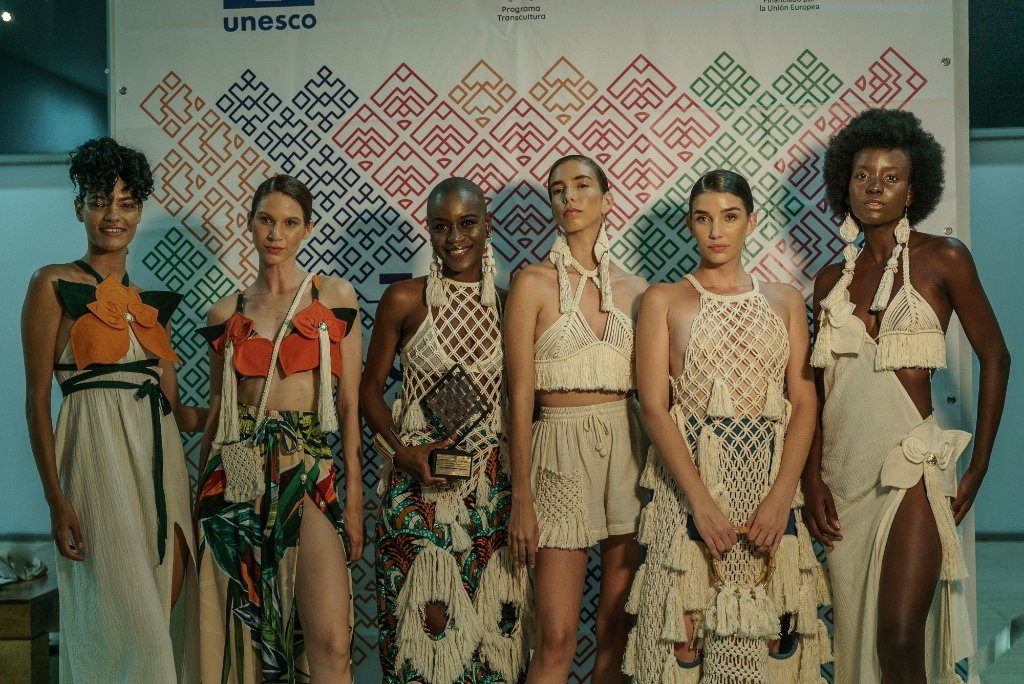
From the applications received, 16 finalists were selected from 11 Caribbean countries. From March 2024, they were enrolled in a professional mentoring programme delivered remotely, receiving specialised coaching and keynote lectures from international fashion industry practitioners. Then, from 2 to 9 May 2024, they gathered in Havana for the culminating week. The setting was itself a statement: the National Museum of Fine Arts of Cuba. On 7 May, the first young Caribbean fashion show ever staged in Havana opened to an audience of UNESCO officials, EU diplomatic representatives, and an international jury whose composition matters as much as any garment on the runway.
Fashion is an economic engine in many regions. It generates jobs, drives innovation and creates business opportunities. By supporting young designers and promoting the local industry, events like ‘Fashion in da House’ can foster economic growth.
— Anne Lemaistre, Director, UNESCO Regional Office for Culture in Havana
That jury — led by Omoyemi Akerele, founder of Lagos Fashion Week, alongside Meta Štular of Slovenia’s Rog Centre, Terri-Karelle Reid of Jamaica, and Carmen Gómez Pózo of Cuba’s National Design Office — was weighted toward the Global South and toward professional fashion industry knowledge. The Caribbean was being assessed by people who understood what it meant to build a fashion industry outside a system that had historically not been built for you. That curatorial decision was political as much as professional.
The 16 designers who showed that evening represented a geographic and cultural sweep no previous Caribbean fashion event had achieved. Abigail Mitchell from Saint Lucia. Anita Frazer and Mikayla Salmon from Jamaica. Dayana Valdés Cureau and Ivanis Agustín from Cuba. Genesis Vasquez, Mildred Henry, and Ranyer Valenzuela from the Dominican Republic. Karen De Freitas from Saint Vincent and the Grenadines. Naballah Chi from Trinidad and Tobago. Navado Dawkins and Taliah Wright from The Bahamas. Nicoya Henry from Antigua and Barbuda. Pearlita J. Richardson from Guyana. Rhea Cummins-Jordan from Barbados. Ronelli Requena from Belize. Eleven countries. Three linguistic traditions. One runway. Not Caribbean fashion filtered through a single national lens, but Caribbean fashion as a collective proposition, presented in the Caribbean itself.
The Winners and What the Award Actually Delivered
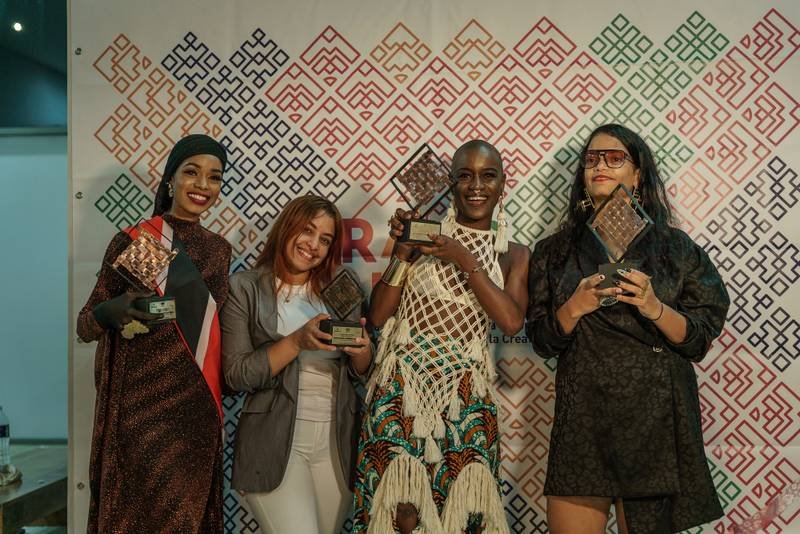
The Transcultura Award incorporated something that distinguished it from every other fashion prize the Caribbean had previously offered its designers: a two-month artistic residency at the Rog Centre in Ljubljana, Slovenia — structured entrepreneur mentoring, product development, branding, and business coaching within one of Europe’s most internationally connected creative production hubs. The award did not simply tell Rhea Cummins-Jordan and Naballah Chi that their work was excellent. It invested in what came after excellence.
Winning this award, representing Trinidad and Tobago, is very important to me as I feel recognised for my work and designs. I am very grateful for this opportunity, because with Transcultura, UNESCO and the European Union are supporting young fashion designers to develop themselves, grow their careers and their brands as Caribbean designers.
— Naballah Chi, Trinidad & Tobago, Transcultura Award Winner
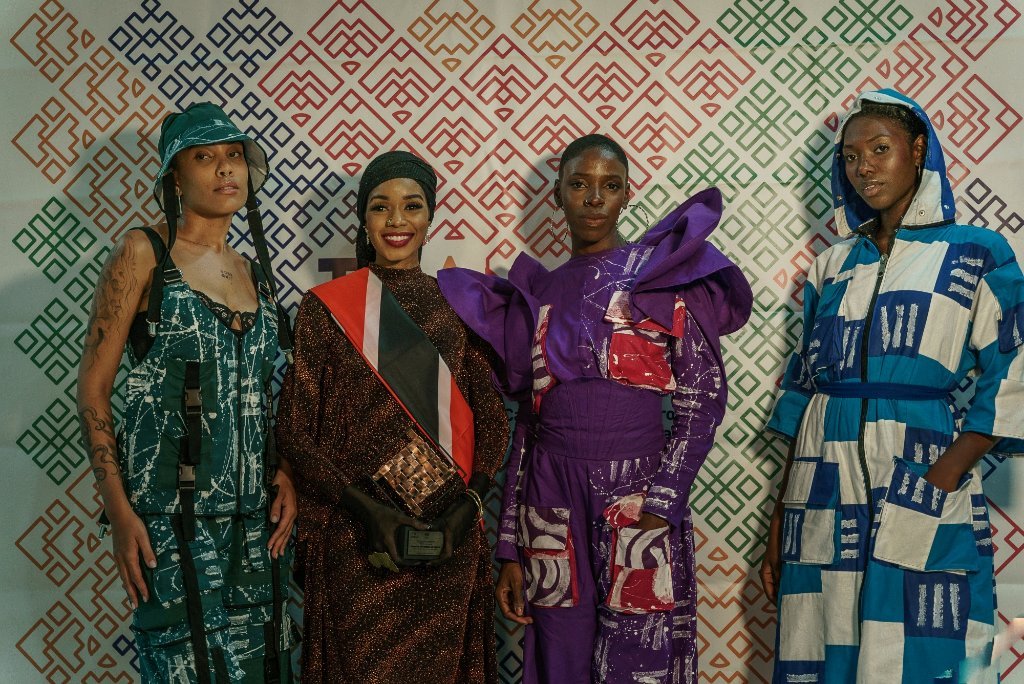
Chi’s trajectory after the award is the programme’s most instructive individual case study. Already working at the intersection of sustainable fashion and Caribbean cultural heritage — her winning collection used organic and repurposed fabrics, zero-waste patchwork techniques, and detachable and reversible design elements to extend garment lifespan — she returned to Trinidad and Tobago and, in 2025, founded the Naballah Chi Textile Recycling Initiative, collecting and recycling textiles, educating communities about sustainable fashion practices, and transforming waste into new creative products. The Ljubljana residency accelerated and formalised a trajectory that had been developing independently. For Cummins-Jordan, founder of Blac Flamingo Apparel, the award was, by her own account, surreal — and the word carries more analytical weight than it might appear. Caribbean designers winning international competitions is not unprecedented. Caribbean designers being sent, as a direct consequence, to a European creative residency for structured professional development: that was new.
It is worth noting honestly, however, that the programme’s most intensive post-event investment reached two designers from sixteen. Karen De Freitas of Saint Vincent received a Special Mention; Genesis Vasquez of the Dominican Republic took the People’s Choice Award. The remaining designers returned home with a week of mentoring and international show experience — genuinely valuable — but without the structured follow-through that converts an inspiring showcase into a sustained commercial trajectory.
Beyond the Runway: The Rest of What Transcultura Built
Fashion in da House was Transcultura’s most visible fashion intervention. The rest of what the programme built was quieter but structurally significant. The Women’s Creative Entrepreneurship Programme enrolled 17 young women entrepreneurs from across the region in structured capacity-building focused specifically on building sustainable businesses in the cultural industries. Its most important dimension was relational: a support network of peer relationships across linguistic and geographic boundaries that individual national programmes are structurally incapable of providing. The Entrepreneurship Incubator enrolled 34 participants from across all 17 programme countries in business model development, grant proposal writing, and project management. The UWI Open Campus partnership delivered 300 fully-funded scholarships for a ten-course business management programme covering financial monitoring, brand management, sales strategy, and grant writing — precisely the gap-filling education that sector development analyses have consistently identified as the most urgently needed for Caribbean designers who have creative skills but lack business vocabulary.
Underpinning all of it was Transcultura Connects: a monthly newsletter that, for five years, served as the region’s most comprehensive aggregator of creative economy intelligence — residencies, scholarships, competitions, training programmes, funding calls — in English, French, and Spanish. Its final edition, published in June 2025 as the programme concluded, contained 65 separate opportunities across 21 countries. For a Caribbean fashion designer trying to build an international profile without the industry connections that proximity to a major fashion capital provides, curated intelligence of this quality, delivered at no cost, is a form of access infrastructure whose value should not be understated.
What the Programme Did Not Do — and What Made It Distinctive
An honest accounting of Transcultura’s contributions requires equally honest attention to its limitations. The most significant was scale relative to need. Sixteen designers in a pan-Caribbean runway show is a historic inaugural event; it is not a platform that builds the sustained buyer and press relationships that a fashion export industry requires. A single show in Havana, however beautifully executed, does not substitute for the kind of annual, well-resourced, internationally attended fashion trade event the Caribbean fashion sector has long needed and still conspicuously lacks.
Fashion was one of fifteen creative sectors within the programme’s scope. That breadth was intentional — Transcultura was a pan-creative-economy intervention, not a fashion-specific one — but its consequence was real: no dedicated fashion strategy, no fashion-specific institutional relationships, and no fashion-specific metrics of success were embedded in the programme framework. And the geographic hub in Havana, while politically and culturally significant, created practical accessibility gradients for designers in some Anglophone territories navigating Cuba’s particular logistical context.
What made Transcultura genuinely distinctive — and what no other programme in the Caribbean fashion support ecosystem has replicated — was its linguistic and geographic integration. Every other institution examined in this series operates primarily within the Anglophone Caribbean. Transcultura was structurally designed around the full linguistic diversity of the Caribbean, with all courses delivered in English, French, and Spanish across a scope that included Cuba, the Dominican Republic, Haiti, and Suriname alongside the Anglophone CARICOM states. The Caribbean fashion sector is not one industry; it is three largely separate industries, divided by language, cultural tradition, and institutional landscape. A programme that placed Naballah Chi from Trinidad on the same competitive stage as Rhea Cummins-Jordan from Barbados and Ranyer Valenzuela from the Dominican Republic — and asked them to articulate a shared Caribbean fashion identity — was doing something that no national programme can do. And staging that proposition in Havana, at the National Museum of Fine Arts, with a Global South-weighted jury, was a statement that Caribbean fashion belongs on a stage of its own — not as a satellite of a European fashion capital, but as a creative force on its own terms.
The Legacy and the Question It Leaves
With Transcultura concluded, the Caribbean fashion sector confronts a familiar question: what infrastructure survives the programme’s end? The Caribbean Cultural Training Hub — the partnerships between Cuba’s Higher Institute of Design, the University of the Arts, and the University of the West Indies — represents the most durable institutional legacy, a regional education network with genuine potential to continue beyond the funding cycle. Whether those institutions have the resources and mandate to sustain it without UNESCO programme management is the critical open question. The MOOC platform remains accessible as long as it is hosted. The 200-plus organisational relationships compound slowly, as connections translate into collaborations and funding applications the programme enabled but did not directly create.
I’m very grateful for this opportunity, because with Transcultura, UNESCO and the European Union are supporting young fashion designers to develop themselves, grow their careers and their brands as Caribbean designers.
— Naballah Chi, Trinidad & Tobago
Transcultura was not a fashion programme. It was a cultural integration initiative in which fashion was one of fifteen sectors, and Fashion in da House occupied one week of a five-year, €15 million intervention. That context makes what the programme achieved for Caribbean fashion more impressive, not less. It produced the first pan-Caribbean fashion show in the region’s history, brought together designers from 11 countries across three linguistic traditions on a single prestigious stage, invested in two winners’ futures through a structured European residency, and created a competition framework that gave Caribbean fashion a regional award with genuine international recognition for the very first time.
For the 16 designers who showed at the National Museum of Fine Arts in Havana that May evening, the experience was something the region had not previously offered them: a pan-Caribbean stage, an international jury, and the institutional signal that their creative work was worth the attention of the world’s oldest cultural organisation and its most powerful multilateral funding partner. Fashion in da House answered, definitively, the question of whether Caribbean fashion deserved serious investment. The question Transcultura leaves behind is who, now that it has concluded, will build the next chapter — and whether they will do so with the same ambition, the same linguistic breadth, and the same conviction that Caribbean fashion is worth a permanent stage of its own.


